Why Your Best Customers Leave — And How to Detect It 3 Weeks Before They Do
Your best customer just cancelled. You never saw it coming. The truth is, the warning signs were there for weeks — in their support tickets, in the tone of their emails, in how their conversations changed. The problem is nobody had time to read them.
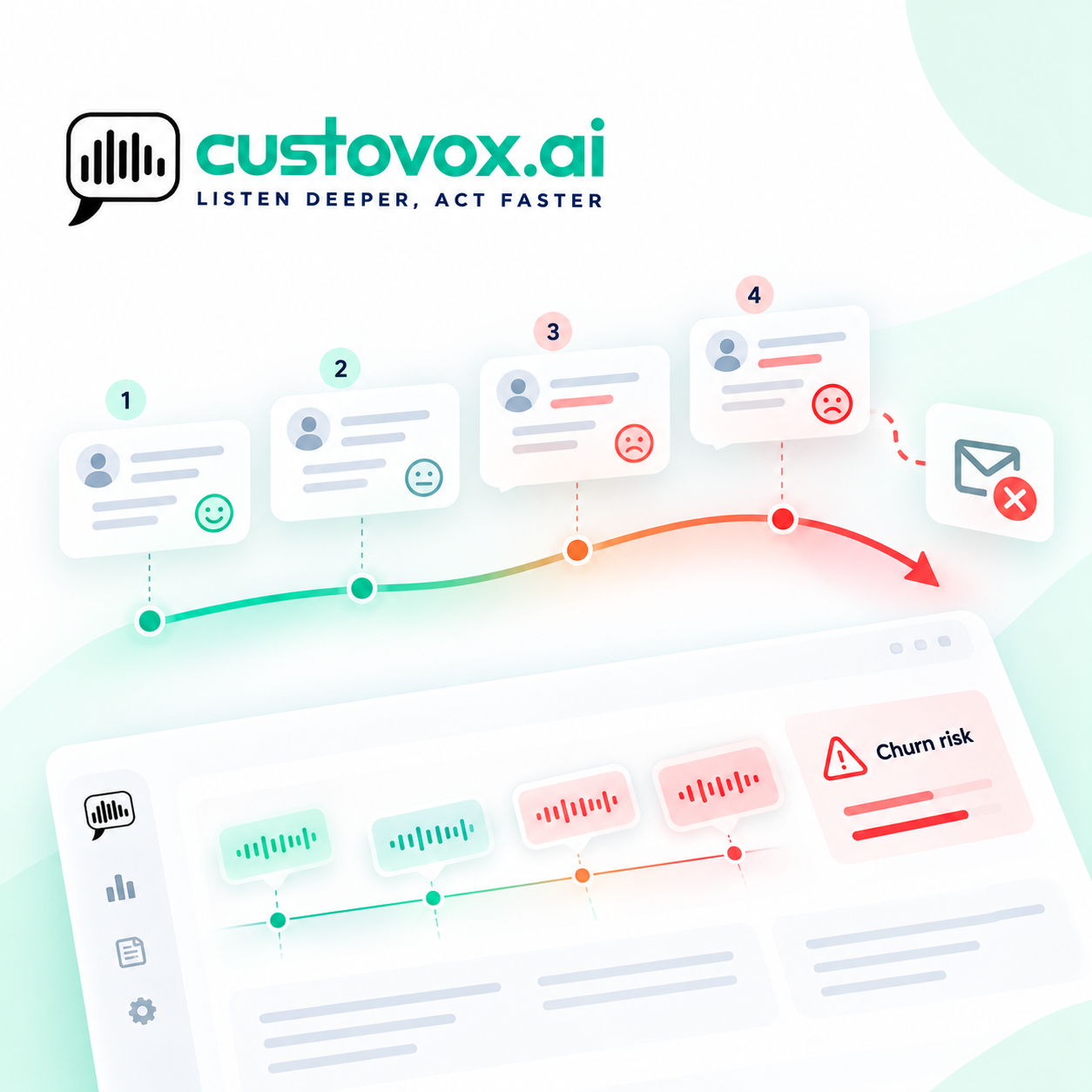
The Churn Paradox
Most CS teams find out about churn when it's already over. The customer has already decided. The cancellation email is a formality, not a signal — it's the last step in a process that started weeks or months earlier.
The paradox is this: the data needed to predict churn has been available the entire time. It lives in support tickets, in call transcripts, in the tone of emails. But without NLP to read it systematically, it stays invisible.
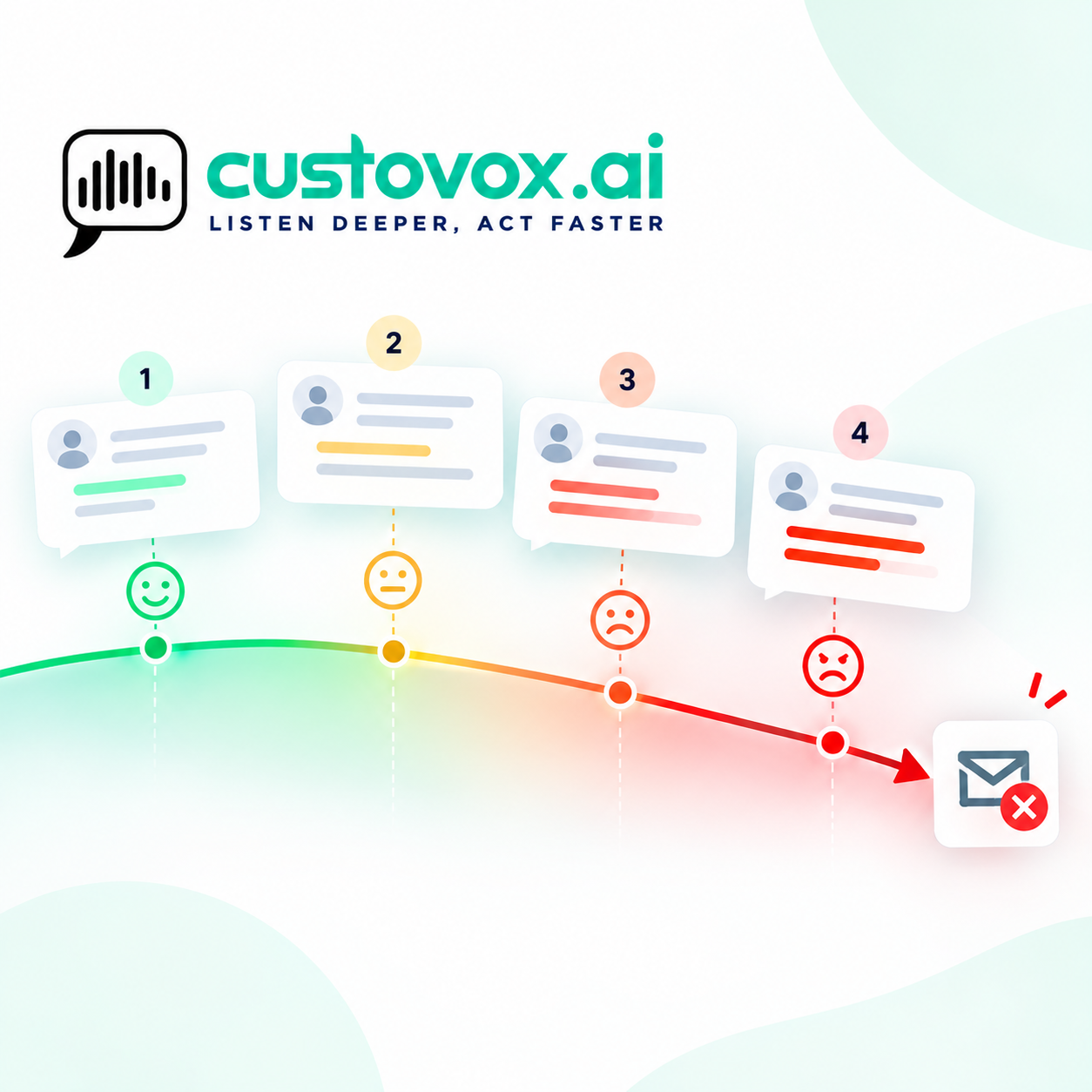
The 5 NLP-Detectable Warning Signals
Signal 1 — Increasing response time
When a customer starts taking longer to reply to support messages, it often signals disengagement rather than busyness. NLP tools track conversation velocity — and flag accounts where response patterns are degrading.
Signal 2 — Shift from questions to complaints
Early in the customer lifecycle, messages tend to be questions: "How do I set up X?" "What does Y feature do?" As satisfaction declines, the tone shifts toward complaints: "This isn't working." "I've had this problem for two weeks." NLP detects this rhetorical shift automatically.
Signal 3 — Increasingly negative emotional language
Sentiment analysis tracks emotional tone across a sequence of messages. A customer whose messages score progressively more negative over three or four interactions is exhibiting a statistically significant churn signal — regardless of what they're actually writing about.
Signal 4 — Shorter, less engaged messages
Message length and complexity are proxies for engagement. A customer who switches from detailed, specific questions to one-line responses is psychologically checking out. NLP can detect this pattern even when the content seems neutral.
Signal 5 — First mention of a competitor
This is the most obvious signal — and the one most CS teams only notice because a human happened to read that particular ticket. NLP flags every competitor mention automatically, across every customer, in every language.
The PEACE™ Escalation Score
custovox.ai's PEACE™ algorithm combines these signals into a single score per conversation:
Score = Emotion × 0.45 + Intention × 0.40 + Sentiment × 0.15
Scores run from 0 to 100. Anything above 70 triggers an alert. Validated on 83,724 real customer conversations. R²=0.848.
What Happens When You Act on These Signals
The ROI of churn prediction comes from intervention timing. Proactive outreach before a customer decides to leave has far better odds than a retention offer made after the cancellation request — by then, the decision is already made.
Find out at cancellation → retention offer rejected → customer already has competitor trial running
Alert at Signal 3 → CS manager calls proactively → identifies real issue → fixes it → customer stays
Implementing NLP Churn Detection
The good news: you don't need a data science team or a six-month implementation to get started. Modern NLP tools process your existing data — support tickets, call transcripts, email threads — and return actionable scores within 48 hours.
The practical steps:
- Connect your customer communication data (Zendesk, Intercom, or email export)
- Run baseline sentiment scoring across your existing customer base
- Identify accounts already showing Signal 3 or 4
- Set up automated alerts for new conversations crossing your threshold
- Brief your CS team on the intervention playbook for each signal level
Run this analysis on your customer data
Send us your last 100 reviews or tickets. We send back a full NLP analysis in 48h. Free, no strings attached.
Get your free audit → No credit card required — ever, until you decide to subscribe